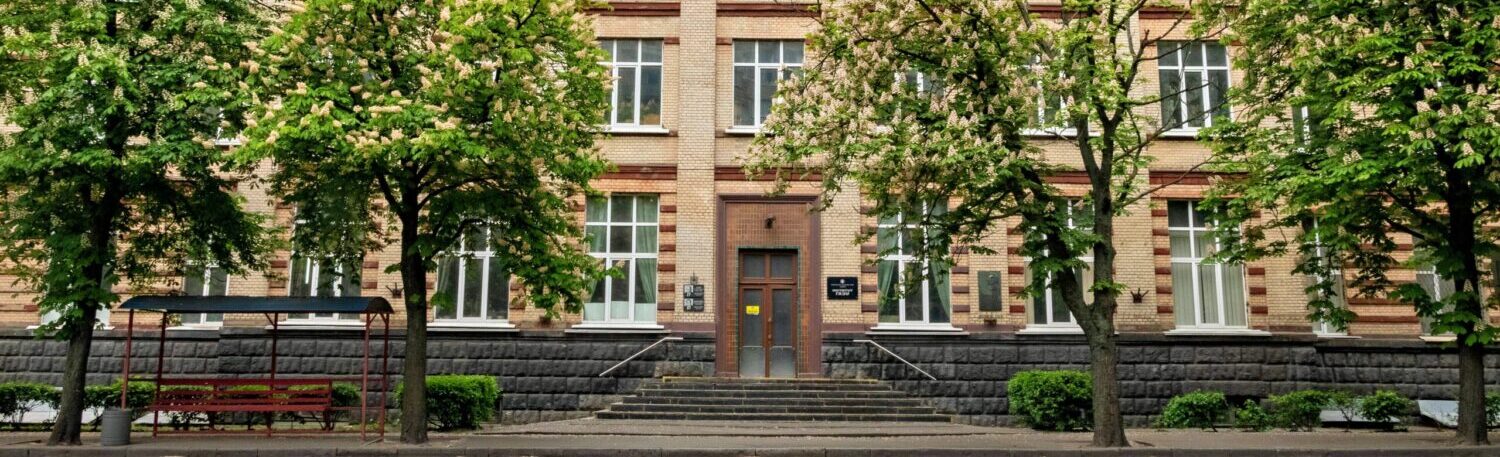
The National Academy of Sciences of Ukraine, the Department of Energy and Energy Technologies, and the Institute of Gas of the National Academy of Sciences of Ukraine announce with deep sorrow that on October 20, 2026, at the age of 99, Isaak Yakovych Sigal—a renowned scientist in the field of energy, leading researcher at the Institute of Gas of the National Academy of Sciences of Ukraine, laureate of the State Prize of Ukraine in Science and Technology, Honored Worker of Science and Technology of Ukraine, Doctor of Technical Sciences, and Professor—has passed away.
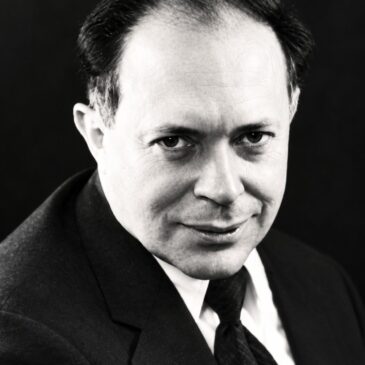
Isaak Yakovych Sigal was born on March 31, 1927, in the city of Vinnytsia. His father, Yakiv Sigal, was an electrical engineer, and his mother was a teacher. The family soon moved to Kharkiv, where his father worked for the organization Kharkivenergo. His father was subjected to political repression in 1937 and was later rehabilitated in 1956. In 1941, having completed the seventh grade in Kharkiv, Isaak Sigal was evacuated with his mother to the city of Kuibyshev. In 1943, he enrolled at the Kuibyshev Aviation Institute, where he studied engine construction for three years. In 1946, he moved to Kyiv and continued his studies, starting from the fourth year, at the Kyiv Polytechnic Institute within the Faculty of Thermal Power Engineering; he graduated in 1948 as a thermal engineer.
Since 1949, I. Ya. Sigal has worked at the Gas Institute of the Academy of Sciences of the Ukrainian SSR (known as the National Academy of Sciences of Ukraine since 1994). He held positions as a senior engineer, junior researcher, and senior researcher; from 1962, he served as the head of a department (which, at his initiative, was named the Department for the Protection of Atmospheric Air from Pollution). He defended his Candidate of Sciences dissertation in 1958 and his doctoral dissertation in 1971; in 1980, he was awarded the title of Professor, and in 1998, he was named an Honored Worker of Science and Technology of Ukraine.
In the 1960s and 1970s, I. Ya. Sigal conducted the first research in the USSR on the formation of nitrogen oxides within a flame. He established the scientific foundations for nitrogen oxide formation during combustion processes and founded a new field of study—along with a recognized scientific school—focused on investigating the conditions under which nitrogen oxides form. This work included the development of combustion methods and technologies designed to minimize nitrogen oxide emissions in power plant, industrial, and heating boilers, as well as methods for the thermal treatment of industrial gaseous emissions released into the atmosphere.
Under the leadership of I. Ya. Sigal, the following have been developed:
- – technologies, methods, and burners with reduced nitrogen oxide formation, which have been implemented on more than 100 power plant boilers and 900 large-capacity hot-water and industrial boilers;
- – fundamentally new boilers featuring double-sided radiant screens (such as the TVG-8, TVG-8r, KVG-7.56, and KVG-4.65 models). These units have been installed in boiler plants across cities in Ukraine and other countries, currently supplying thermal energy to more than 10 million residents (with over 8,500 boilers—having a total installed thermal capacity of 60 GW—currently in operation, including approximately 2,300 boilers in Ukraine).
- – methods for the thermal treatment and neutralization of industrial emissions—specifically from the paint and varnish, woodworking, and other industries—implemented at 20 enterprises (patented internationally, including in the USA).
Under his supervision, 20 Candidate of Sciences dissertations have been prepared and successfully defended. I. Ya. Sigal has published over 380 works, including 12 monographs, and holds more than 60 inventor’s certificates and patents (from Ukraine, Germany, the USA, and other countries).
He was awarded the Order of Merit, 3rd Class (2009), the 2012 State Prize of Ukraine in Science and Technology, and numerous medals—including the UNESCO “Man and the Biosphere” medal (1975–1985), two gold and one silver medal from the VDNKh (Exhibition of Achievements of National Economy), and the “Gratitude” badge from the Kyiv City State Administration (on two occasions). Wikipedia features a page dedicated to I. Ya. Sigal: https://en.wikipedia.org/wiki/Isaak_Sigal.
The cherished memory of Isaac Yakovych Sigal—a prominent Ukrainian scientist, a man of exceptional intellect and tolerance, with whom it was easy to discuss and resolve the most complex scientific and engineering challenges in the energy sector—will forever remain in the hearts of those who worked and interacted with him; meanwhile, the scientific school he established throughout his lifetime will continue his work.
We express our sincere condolences to the family, loved ones, and colleagues of Isaak Yakovych on this heavy loss.
The farewell ceremony will take place on October 22, 2026, starting at 13:45, in the ceremonial hall of Kyiv City Clinical Hospital No. 18 (Kyiv, 17 Shevchenko Blvd.).
What stands out in this obituary is the scale of the impact over 8,500 boilers still supplying heat to millions of people. That’s a rare kind of legacy for a scientist, where the work quietly keeps serving the public decades later.